Dr. Buschbach and Dr. Gupta are dedicated to staying up to date on the dental literature to ensure patients are receiving the highest quality of care supported by strongest research and updated guidelines.
New US study finds recommended fluoride levels linked to better teen cognitive performance
After accounting for socio-economic, demographic and geographic factors, the study found consistently positive associations between recommended fluoride exposure and adolescent cognitive performance
Gingivitis occurs when sticky plaque and hard tartar form at and below the gums. Brushing and flossing teeth, plus getting regular cleanings at the dentist’s office, can help reverse and prevent gingivitis.
Evidence suggests that chewing gum can help people feel more focused and less stressed. Chewing sugar-free versions can hinder cavities. But constant gum-chewing can tire jaw muscles, and xylitol-containing gum can trigger abdominal distress.
People who regularly floss their teeth (one or more times per week) may lower their risk of stroke caused by a blood clot traveling from the heart and a stroke associated with an irregular heartbeat such as atrial fibrillation (AFib).
Time to prepare for Dental Infection Control Awareness Month, presented by ADS
The Association for Dental Safety launches DICAM 2025 with weekly infection prevention topics, toolkits, and Ask ADS to elevate dental safety for teams and patients.
“A lot of times we think of children refusing to brush teeth as a ‘won’t do’ instead of a ‘can’t do,’ and it’s really important to assess that part of it,” says Natalie Buerger, PhD, clinical director of the Autism Spectrum Disorder Clinic at Huntsman Mental Health Institute at the University of Utah.
Dr. Daniel Thunell, a board-certified periodontist at University of Utah Health’s School of Dentistry, is going to talk us through a little bit about what every parent-to-be needs to know about their oral health.
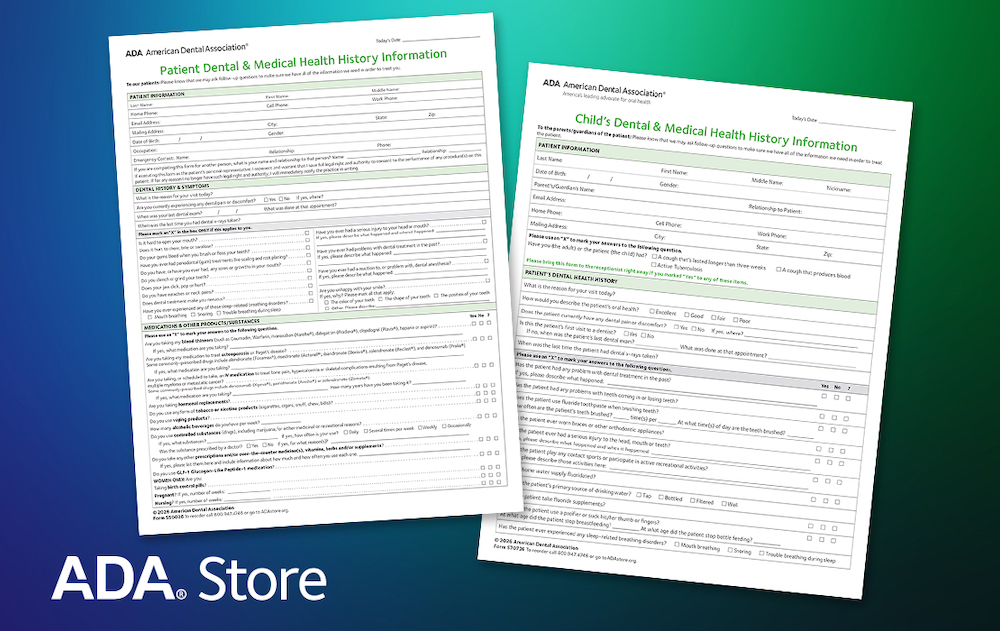
ADA adds mental health, GLP-1 questions to health history forms
Updated patient health history forms from the American Dental Association include a new screening question related to mental health and the addition of GLP-1 receptor agonists to the list of medications patients may be taking.